
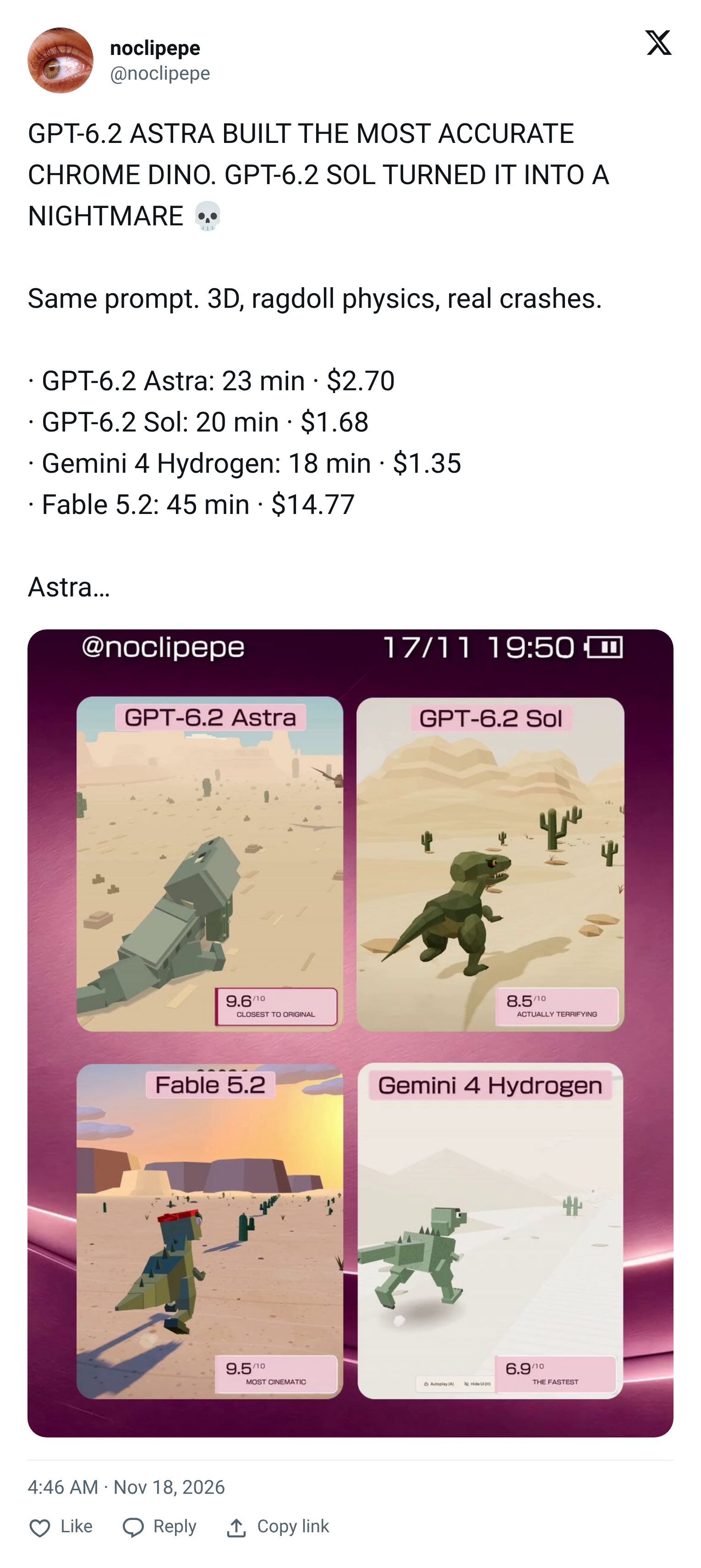
Same prompt, two models: GPT-6.2 Astra built a 3D Chrome Dino for $2.70. Claude Fable 5.2 charged $14.77 for the same game.
Yet on realistic work tasks graded by the research group Epoch AI, Fable scored 17 points higher.
GPT-6.2 Astra is OpenAI's answer to Claude Fable 5.2, launched eight days later.
It landed two days before Anthropic's stock started trading, and in that window builders put both models through the same tests.
The results split in a way that matters for anyone paying the bill.
Below is the breakdown, with the videos embedded so you can judge for yourself:
Inside you'll find:
The Week AI Went Public: Two Launches and a $2 Trillion Debut
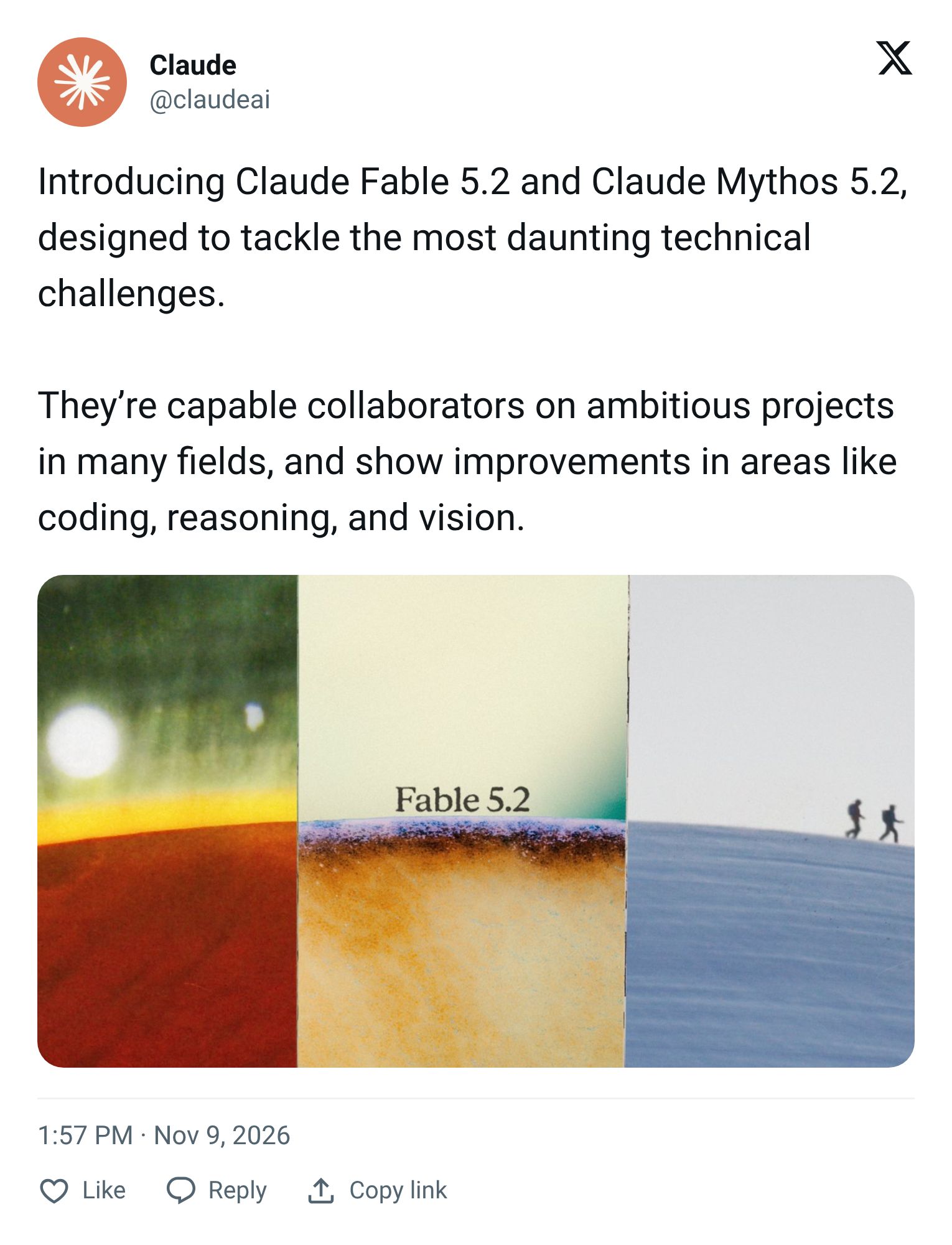
Fable 5.2's Best Work Isn't a Game: Robot Arms, Circuit Boards and an OS
Astra's First 48 Hours: Paris in 3D and the Best Robot Code Yet
10 Same-Prompt Showdowns: The Scoreboard
The Backlash: Fair Criticism or Bad Timing?
Paid: the full showdowns, the benchmarks, a 12-job playbook with prompts, and what a 5-person team really pays
1. The Week AI Went Public: Two Launches and a $2 Trillion Debut
Anthropic released Claude Fable 5.2 on November 9. OpenAI answered with GPT-6.2 Astra and its cheaper sibling, GPT-6.2 Sol, on November 17.
On November 18, Anthropic priced its IPO at $83 a share, raising $81.3 billion, more than SpaceX's $75 billion record from June. This morning, ANT opened on Nasdaq at $111.50, 34% above the IPO price, for a valuation of roughly $2 trillion.

→ For two days, the most talked-about model in AI was not the one made by the company going public.
On list price, the flagships are now level: both charge $8 per million input tokens and $40 per million output tokens. The real difference is how many tokens each one burns to finish a job.
2. Fable 5.2's Best Work Isn't a Game: Robot Arms, Circuit Boards and an OS
Most people think of AI demos as games. Fable's most impressive work wasn't one.
Operating system. Anthropic says an engineer asked Fable to build an OS from an empty folder. It ran more than 1,000 subagents over eight days and delivered windows, a login screen and an installer.
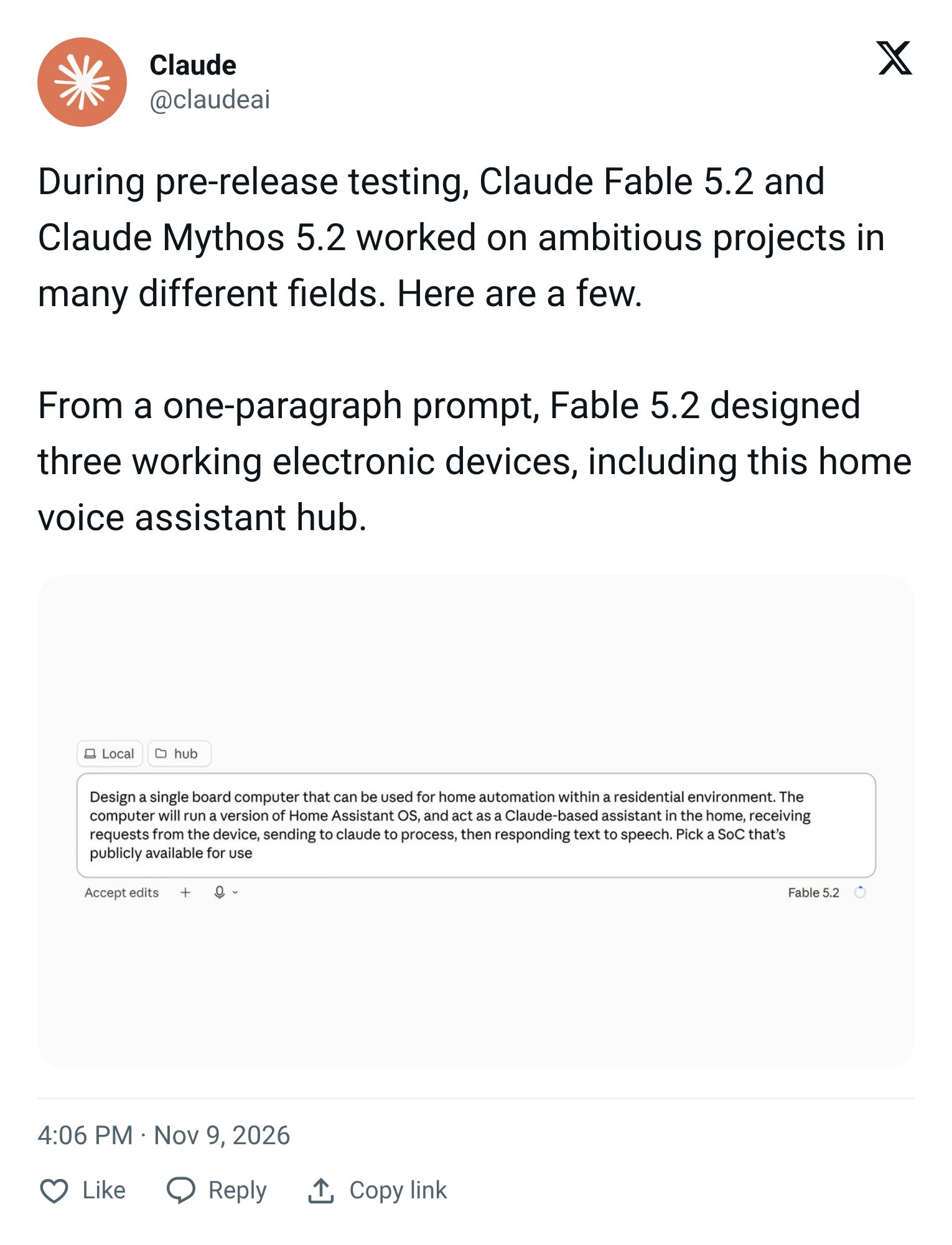
Hardware. With Diode, a circuit-board maker, Fable designed three working devices from a one-paragraph prompt: a voice-assistant hub, a USB speakerphone and a handheld virtual pet. Each board was ready for manufacturing in under a day.
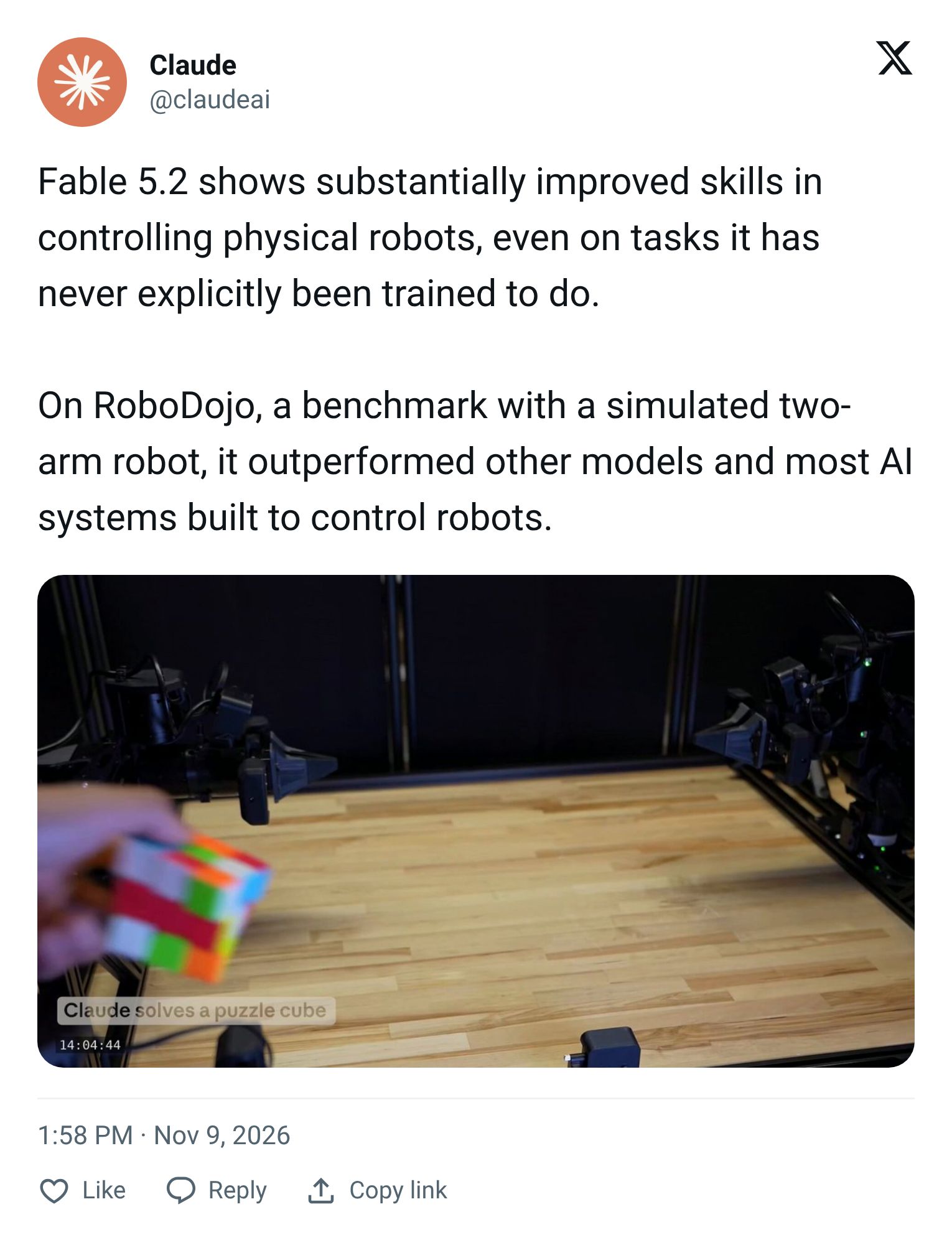
Robotics. In Anthropic's launch video, robot arms run by Fable solve a puzzle cube, unscrew a bottle cap and draw a picture.
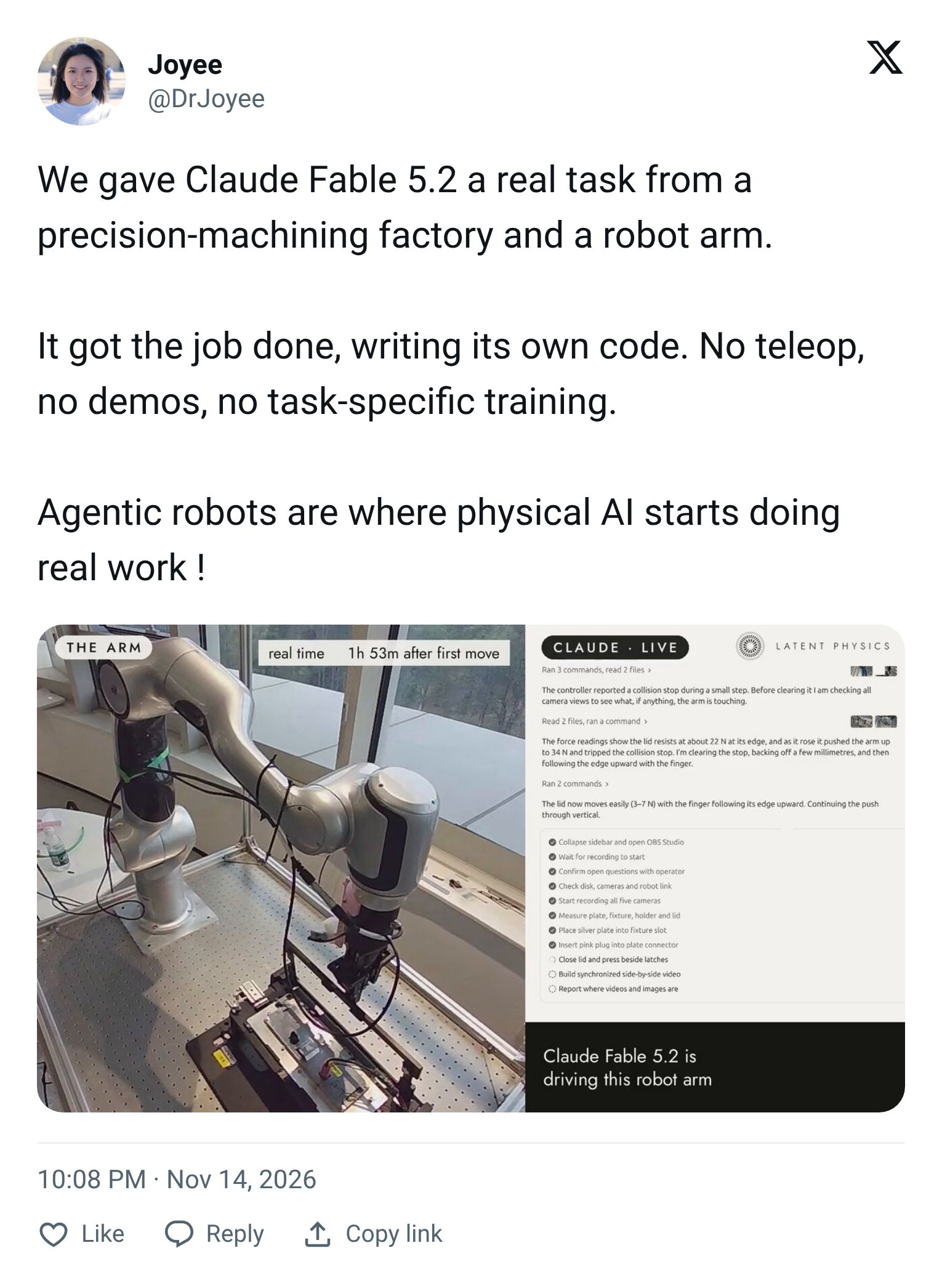
Researcher Joyee then gave Fable a real task from a precision-machining factory. It wrote its own robot code, with no teleoperation and no task-specific training.
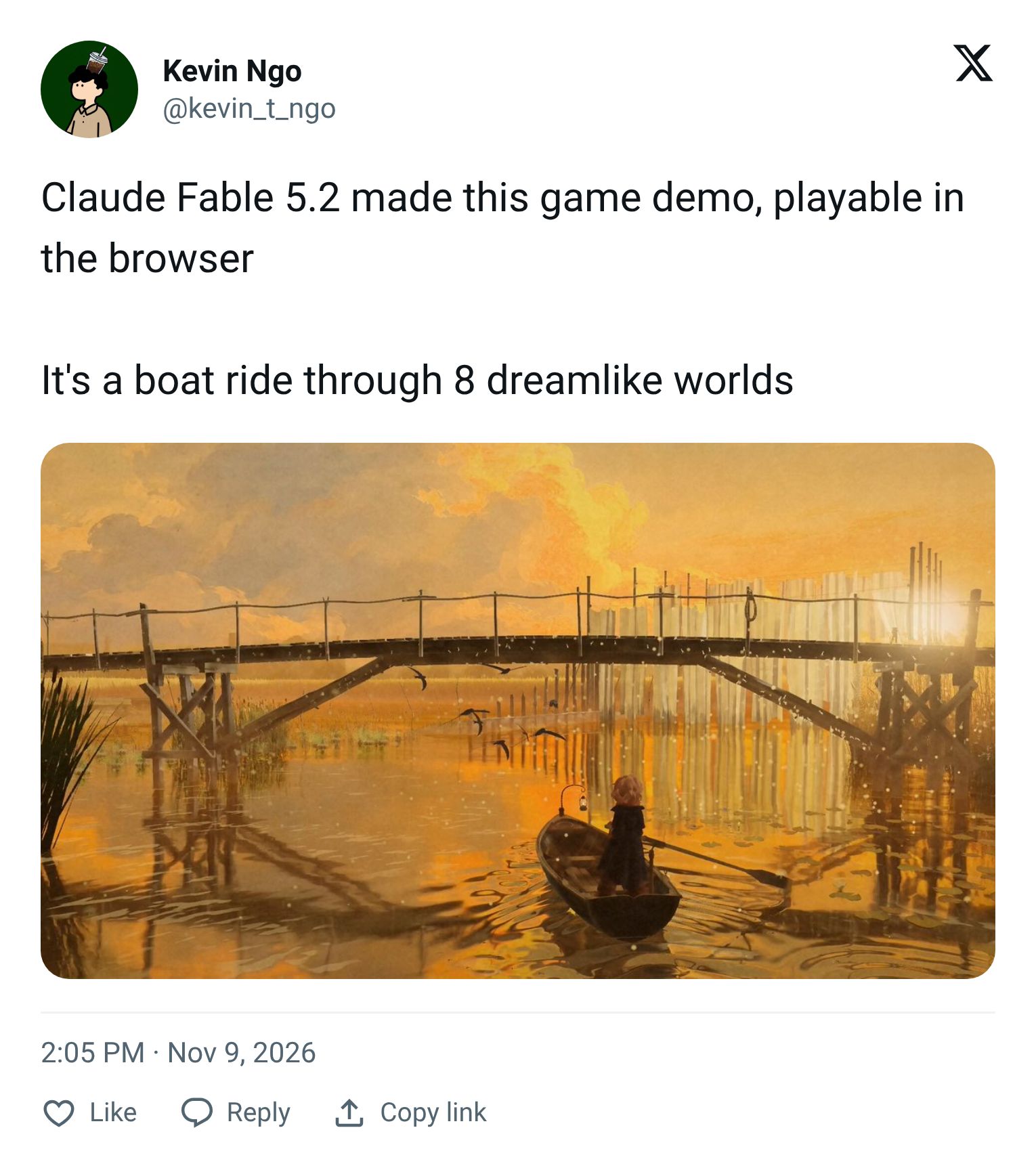
Games. Kevin Ngo's "What the Water Keeps" is a boat ride through eight dreamlike worlds, playable in the browser.
→ The pattern: Fable shines on long, autonomous jobs where it has to plan, check its own work and keep going for days.
3. Astra's First 48 Hours: Paris in 3D and the Best Robot Code Yet
Astra has been public for two days, and its demos lean into 3D, maps and physical space.
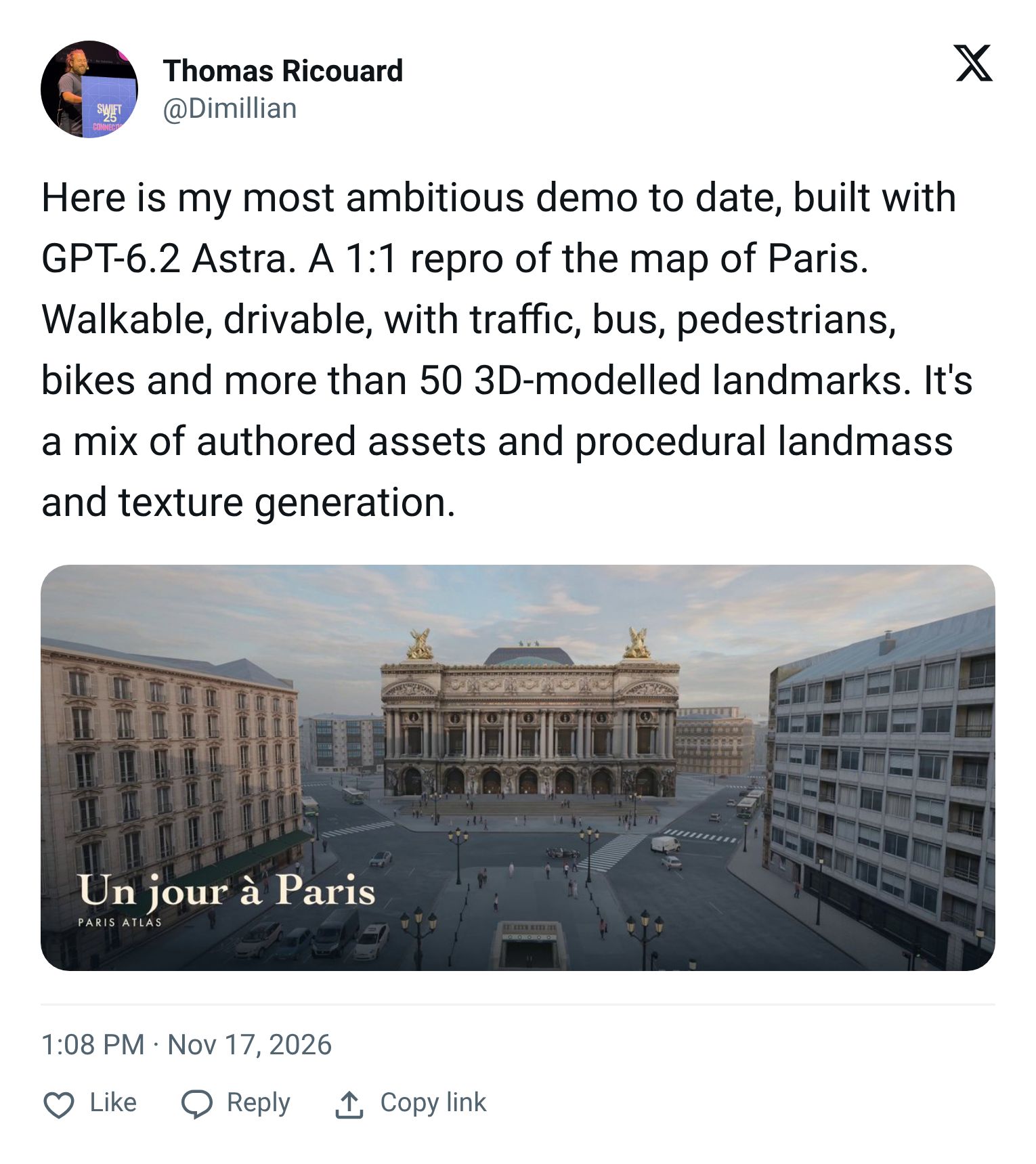
OpenAI's Thomas Ricouard built a 1:1 map of Paris you can walk and drive, with traffic, buses, pedestrians, bikes and more than 50 modeled landmarks.
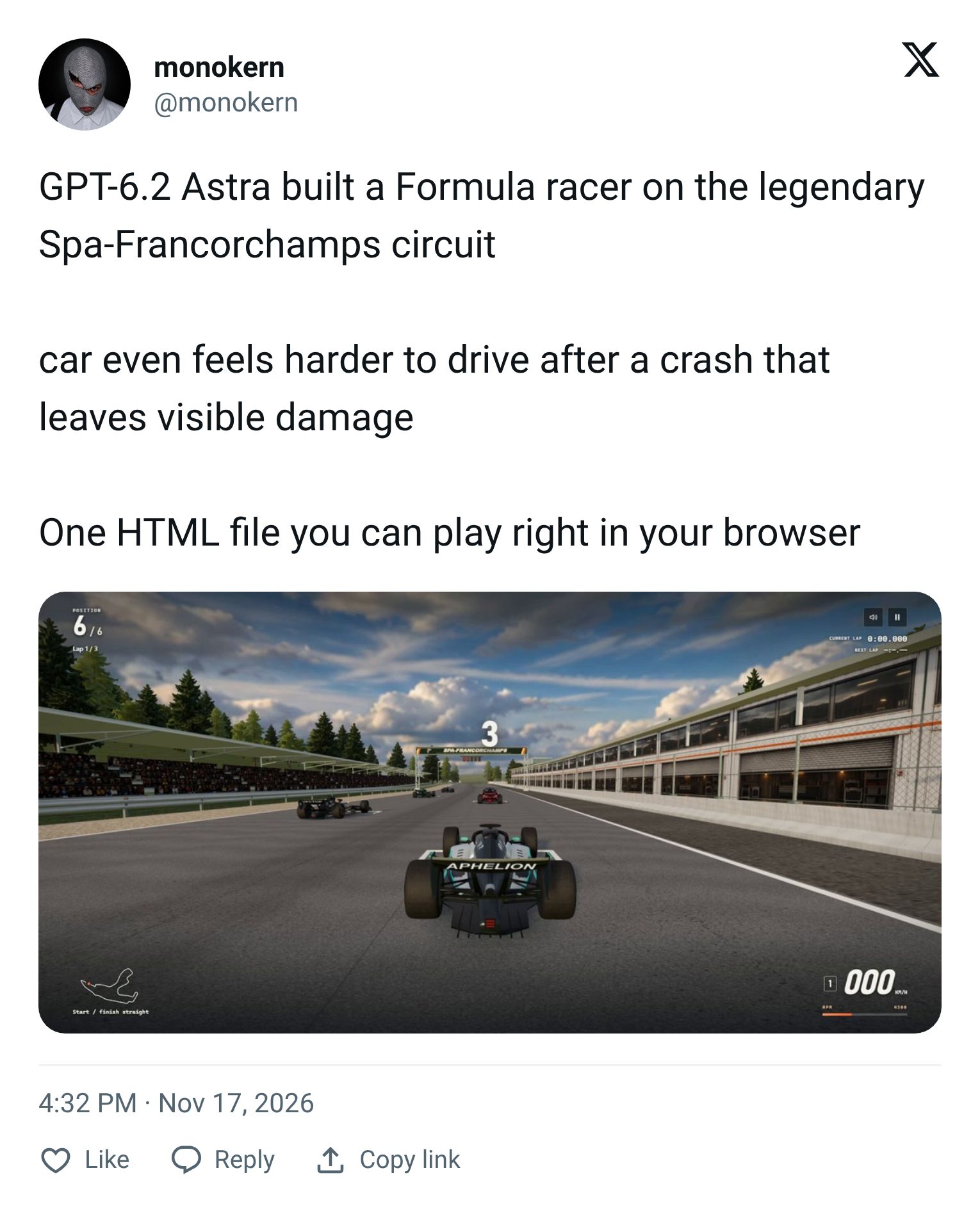
Developer @monokern built a Formula racer on the Spa-Francorchamps circuit, where crash damage changes how the car drives. It runs from a single HTML file.
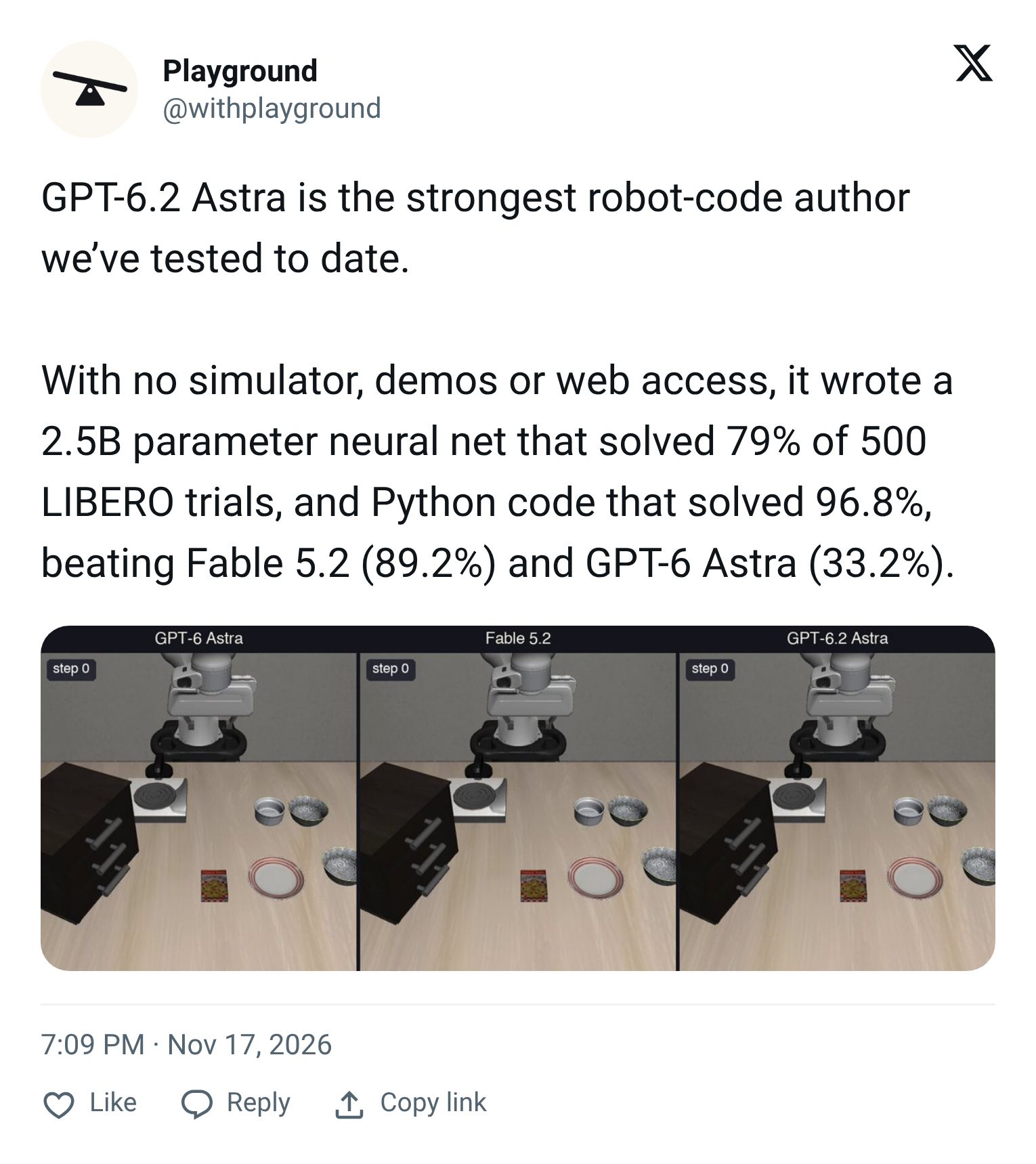
Robotics is where Astra surprised people. The previous GPT-6 Astra trailed Fable badly; 6.2 flipped it. Playground says Astra wrote robot code that solved 96.8% of 500 LIBERO trials, against 89.2% for Fable 5.2.
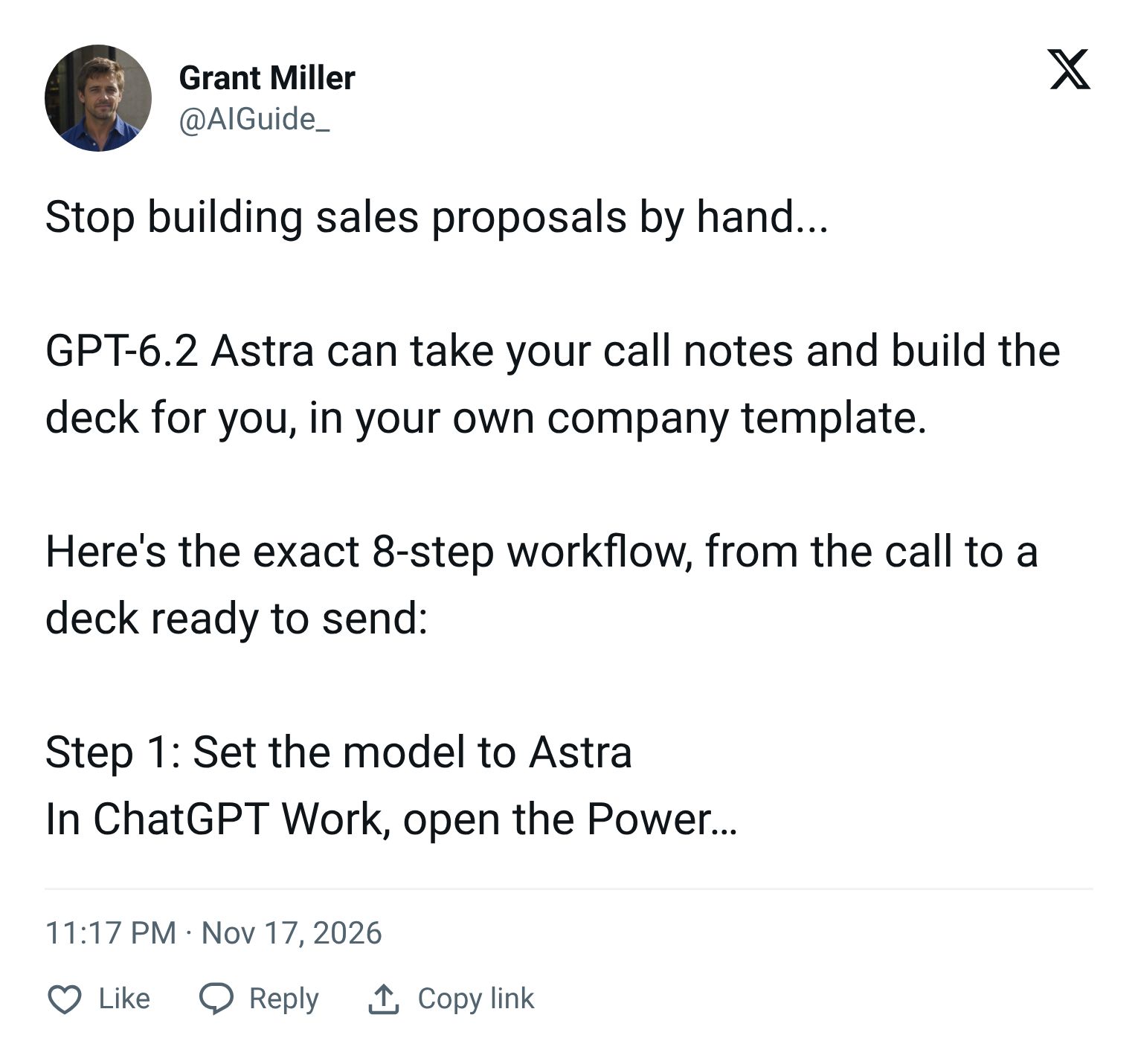
Business. Creator Grant Miller showed Astra turning sales-call notes into a finished deck in the company's own template.
→ The pattern: Astra is fast and cheap at spatial work, from 3D scenes and maps to robot code.
4. 10 Same-Prompt Showdowns: The Scoreboard
We tracked 10 public tests where a creator gave both models the same prompt.
Creators picked Astra 4 times and Fable once. Three ended in a split, and two compared only cost and time. Astra was cheaper in 4 of the 5 builds where both bills were published.

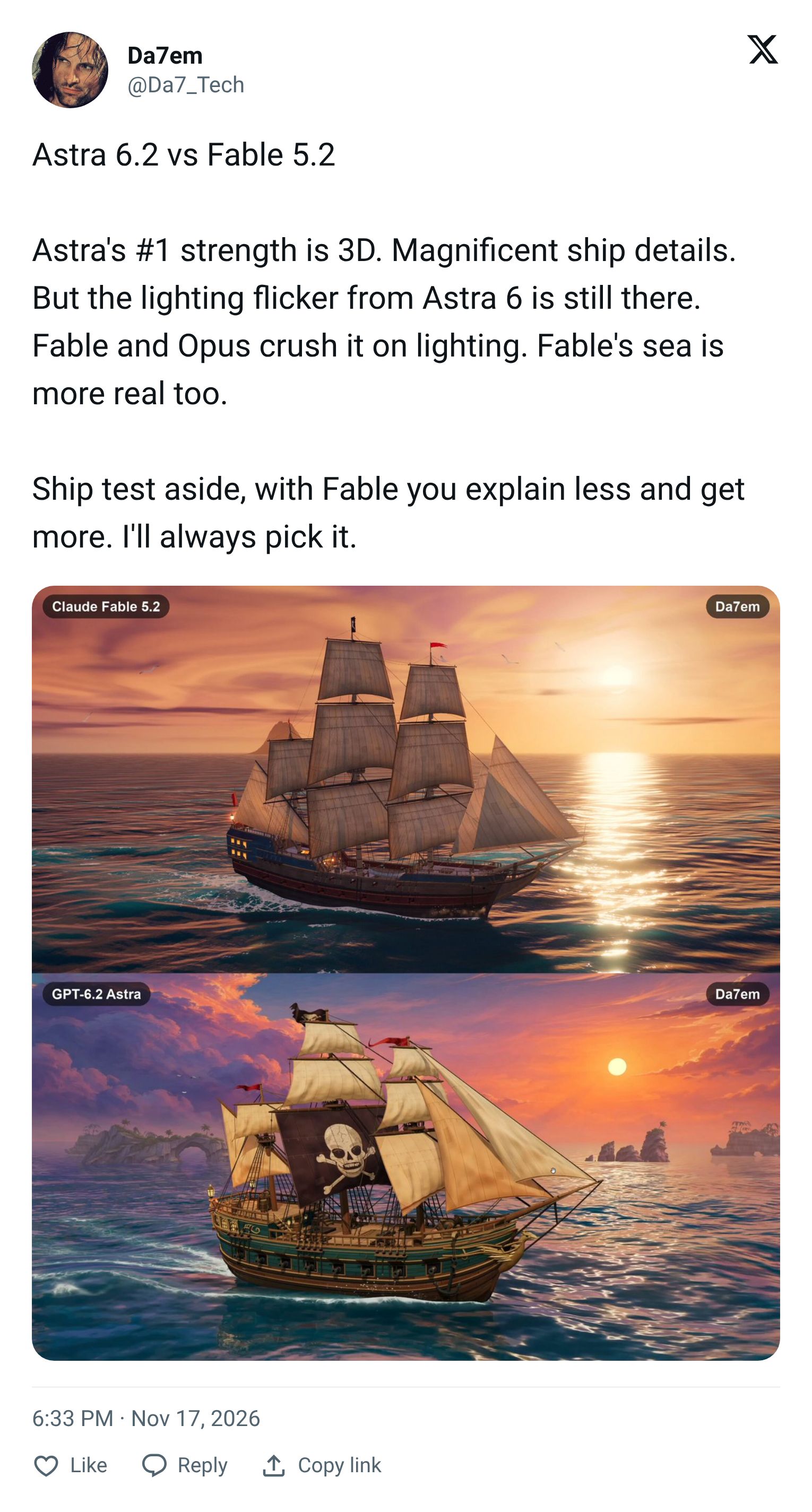
The one clear Fable win is telling. In a ship-at-sea test, Astra modeled more detail, but Fable's light and water looked real. The creator's verdict: with Fable, "you explain less and get more."
→ Creators preferred Astra for output per dollar and Fable for judgment. The full breakdown of all 10 tests is in the paid section.
5. The Backlash: Fair Criticism or Bad Timing?
Within hours of launch, X was full of people calling Astra a letdown, and some of it came from serious testers.
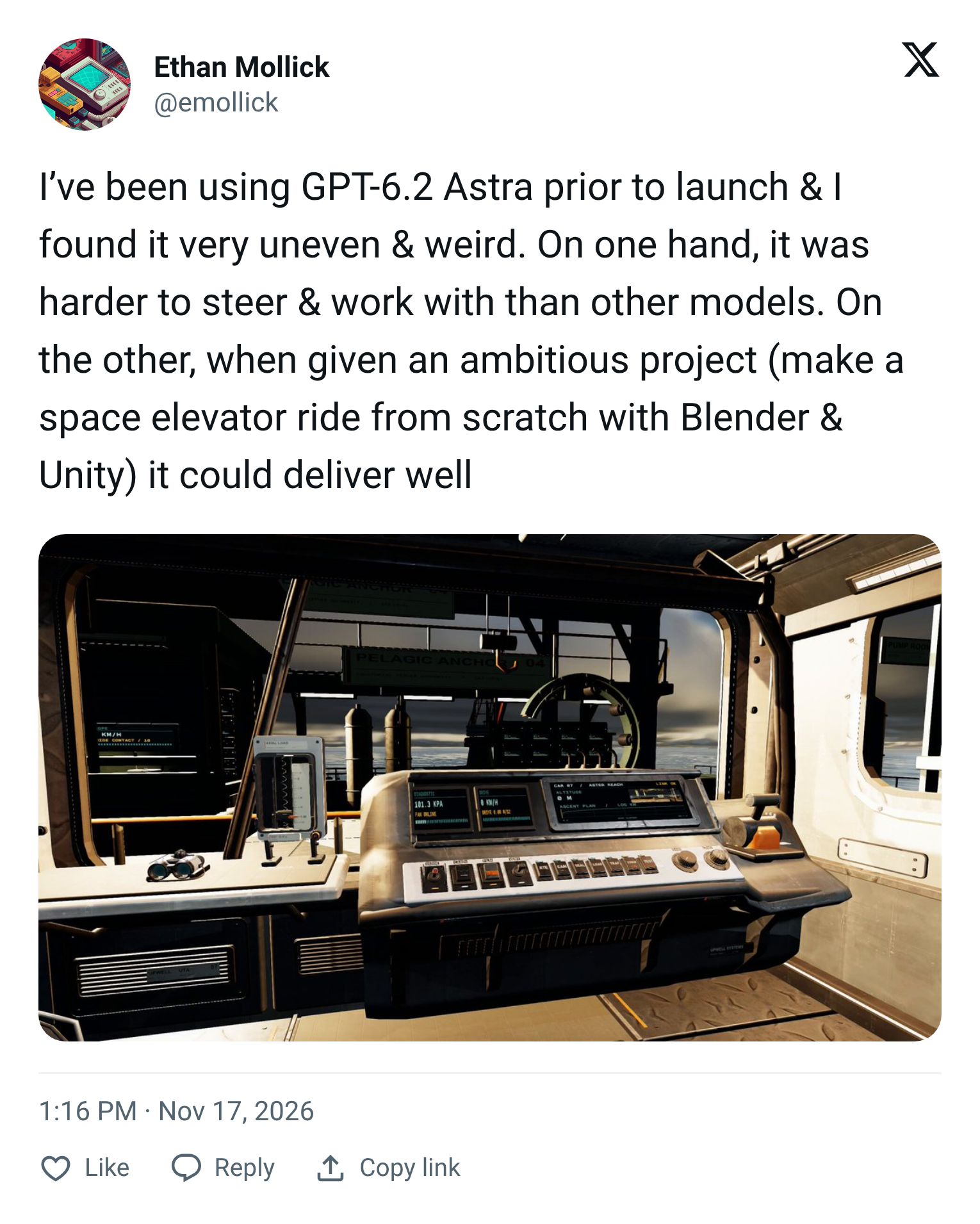
Developer Theo Browne, who had early access, said he "would not choose this over Opus 5.5" for his work. In his main test, Astra spent seven days rewriting his TypeScript compiler and left it 56% slower. Ethan Mollick called Astra "very uneven & weird," but said it delivered on an ambitious Blender-and-Unity project.
The calendar invites questions in both directions. Did OpenAI time its launch to steal attention from Anthropic's IPO week? And was the pile-on purely organic, or did it get help from people who benefit from a weaker Astra story right before the listing?
Both are possible. We found no evidence for either, and the hardest criticism comes from named testers with public methods.
→ Our read: ignore the hype and the backlash alike. Look at the tests.
Here's what the tests say for founders. Fable wins the work that has to be right: code, financial analysis, research. Astra wins on legal review, science and price. GPT-6.2 Sol, which almost nobody is talking about, may be the best deal of all for everyday work.
The rest of this post turns that into decisions: which model to use for 12 common startup jobs, a prompt for each, and what a 5-person team actually pays per month.

Subscribe to PREMIUM to read the rest.
Become a paying subscriber of PREMIUM to get access to this post and other subscriber-only content.
UpgradeAlready a subscriber? Sign in
A subscription gets you:
- Everything included in Plus.
- Ongoing access to new AI agent templates and the full library.
- Complete access to the investor database and pitch deck collection.
- Save 75% compared with paying monthly.
